Career Burnout in 2026, Why So Many People Are Rethinking Work
The World of Work Has Changed, and So Have We
Over the past few years, I’ve noticed a huge shift in the conversations I’m having with my career coaching clients.
Some are in their twenties and already questioning whether the traditional “work hard and climb the ladder” model is really worth it.
Others are in midlife and quietly wondering: “Is this it?”
- Many are exhausted.
- Some are burnt out.
- Others simply feel flat, disconnected, or stuck in careers that no longer fit the life they want.
And honestly? I don’t think it’s because people have become lazy, unrealistic, or less resilient.
I think the world of work has changed, and so have we.
When We’re Young, Motivation Often Feels Easier
When we first enter the world of work, there’s often a natural momentum behind us.
We have energy. Ambition. Something to prove. And usually, a long list of goals we can’t wait to achieve.
There are lots of exciting “firsts”:
- our first proper salary,
- first promotion,
- first office,
- first company car,
- first management role,
- first business idea,
- first sense of independence.
Progress feels visible and exciting. Hard work feels energising when it’s attached to growth and possibility.
At that stage of life, many of us are motivated by achievement, recognition, and building a future for ourselves.
And there’s absolutely nothing wrong with that.
But Over Time, Our Relationship With Work Changes
As the years pass, something often shifts. Not because we become lazy or lose our ambition. But because repetition accumulates.
We’ve sat through the meetings. Hit the targets. Managed difficult colleagues. Survived restructures. Answered the emails at stupid o’clock. Trained the new manager, who somehow now earns more than we do.
Day after day can start to feel very similar to the last. Sometimes clients describe feeling guilty because, on paper, their life looks “fine”.
They may have:
- a stable job,
- a decent salary,
- a respectable career,
- and responsibilities they’ve worked hard to build.
But underneath it all, they feel flat.
Not dramatic, life-on-fire burnout necessarily.
More what I jokingly call: “existential beige exhaustion.”
That feeling where you wake up on Monday morning and think: “Surely there must be more to life than this?”
My Own Turning Point
By my early forties, I’d spent 17 years working in retail, eventually managing a large store at Cribbs Causeway in Bristol, one of the busiest retail parks in the UK.
Retail is hard work.
I was responsible for a team of 35 people and a multi-million-pound turnover business. We worked weekends, bank holidays, long hours, and at the time, that culture was simply expected.
And to be clear, I didn’t hate my job. In fact, I enjoyed much of it for many years. But eventually the pace and pressure began to take their toll.
I remember buying a pale grey (greige) suit for work. Looking back now, it completely washed me out and it feels strangely symbolic. I was exhausted, irritable, and no longer felt like myself.
At one point, I remember feeling envious of a friend who was in hospital because at least they were allowed to stay in bed and rest for a few weeks. That sounds awful to admit out loud now, but I know many people will quietly understand exactly what I mean.
At the time, I didn’t even know the word “perimenopause”, but with hindsight, I suspect that may also have been part of the picture.
In 2009, my Nanna became ill. I’d built up enough days in lieu to spend several weeks with my mum and aunts helping to care for her before she passed away.
Those weeks were heartbreaking, but strangely beautiful too. Life became very simple for a while. We cooked, we sat together. We talked and cared for each other.
And somewhere during that time, I began asking myself a question that would eventually change my life:
“What would I do if I didn’t do this job?”
Interestingly, I didn’t leave immediately. In fact, I stayed for another four years. And I think that’s important to say too.
Looking back now, I think those weeks planted a seed that slowly grew over the following years.
At the time, I wasn’t consciously planning a career change.
I still had responsibilities, fears, practical considerations, and a life that felt very established.
But something had shifted internally.
And perhaps having a career coach back then would have been the equivalent of regular watering, helping that seed of change grow with more clarity and confidence.
Younger Generations Are Questioning the Old Rules Earlier
One of the biggest changes I’ve noticed recently is the age of the clients coming to me for career coaching.
A few years ago, the vast majority of my clients were in midlife, often people who had spent decades building careers before realising something no longer felt right.
Now, around 50% of my clients are in their twenties.
That’s a huge shift.
Younger people are questioning traditional ideas about success much earlier than previous generations often did. Many are more aware of burnout, mental health, flexibility, and the importance of meaningful work.
They’ve watched older generations work incredibly hard, often at high personal cost, and many are asking themselves:
“Is there another way to build a successful career without completely exhausting myself in the process?”
And truly, I think there’s something healthy about that.
Working For The Weekend
Recently, one client said something to me that really stayed with me.
He described his working life: “I tolerate five days every week to earn two days of living.”
How many people still feel like that in 2026? Working for the weekend has become so normalised that we rarely stop to question it.
Of course, every job has difficult days. Work is still work. But I don’t believe that life is meant to be endured.
That’s one reason my catchphrase from the very beginning of my coaching business has been:
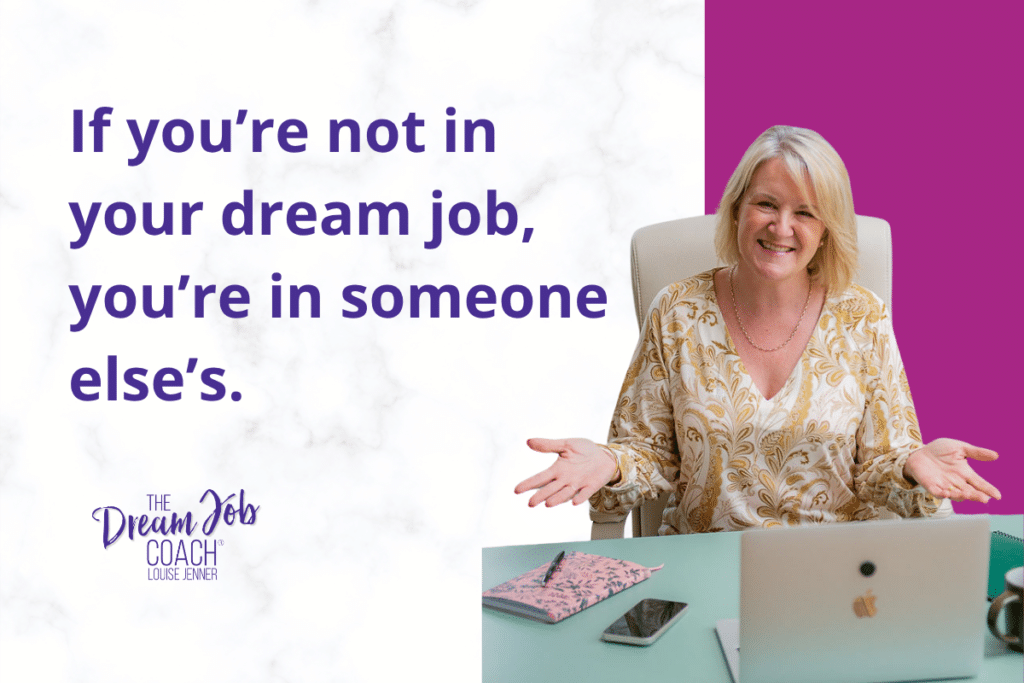
“If you’re not in your dream job, you’re in someone else’s.”
And no, that doesn’t necessarily mean quitting tomorrow to become a yoga teacher in Bali!
It means recognising that your working life matters.
Your energy matters.
Your wellbeing matters.
Your time matters.
Because this isn’t a rehearsal.
Work Does Not Exist In Isolation
One thing I’ve always explored during career clarity sessions is not just someone’s work-life, but also their home-life and social-life.
That’s intentional.
Because work does not exist in a neat little box separate from the rest of our lives.
If we work an average eight-hour day and sleep for roughly eight hours a night, work already takes up at least half of our waking hours.
In reality, for many people, it’s even more than that once you factor in:
- commuting,
- unpaid overtime,
- work emails,
- WhatsApp messages,
- Sunday evening dread,
- and the mental load of constantly being “switched on”.
So when someone says, “It’s only a job,” I understand the sentiment, but I also think it minimises how deeply work affects our wellbeing and quality of life.
Because if something consumes such a huge percentage of our time, energy, and mental space, of course it impacts the rest of who we are.
That’s why career coaching is rarely just about finding another job.
It’s about creating a working life that supports your overall life rather than quietly draining it.
Success Looks Different At Different Stages Of Life
When we’re younger, success is often about growth and achievement.
Later, it can become more about alignment.
People start valuing:
- flexibility,
- freedom,
- peace of mind,
- meaningful work,
- good health,
- autonomy,
- creativity,
- and having enough energy left to enjoy life outside work.
That isn’t “giving up”.
It’s wisdom.
Many people reach a point where they no longer want to spend their entire life proving themselves at the expense of their wellbeing.
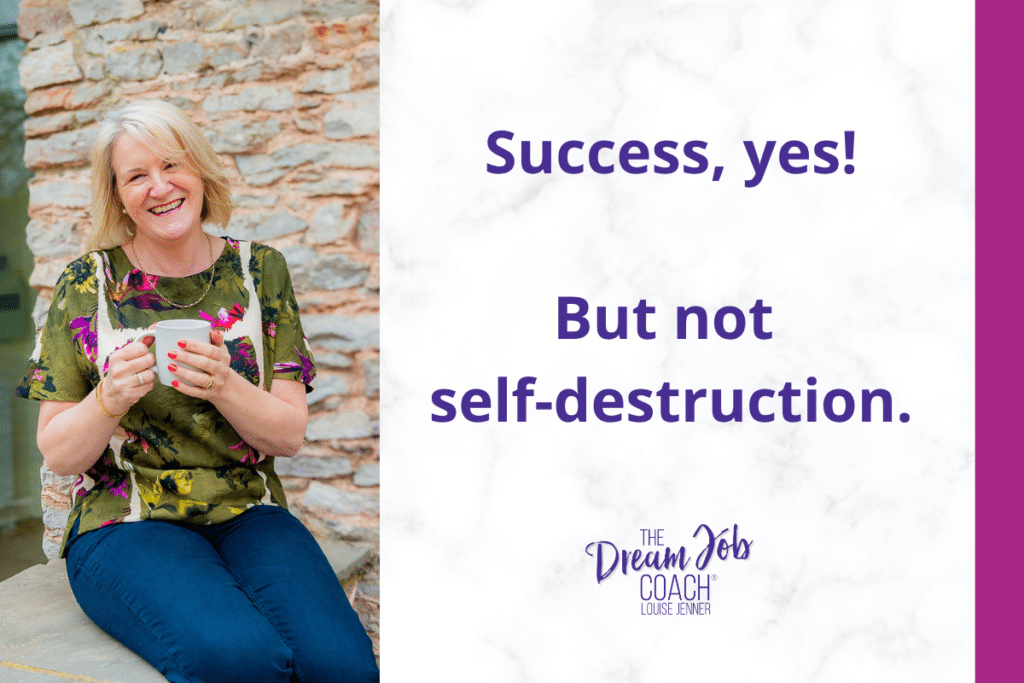
They want success, yes. But not self-destruction.
The Workplace Itself Has Changed
At the same time, the workplace is evolving rapidly.
- Technology and AI are changing industries at an incredible speed.
- Hybrid working has shifted expectations.
- Traditional career ladders are becoming less predictable.
- The hidden job market is more important than ever.
- And more people are creating portfolio careers, freelance businesses, or entirely new paths for themselves.
The old idea that there is one “correct” career route simply doesn’t fit modern life anymore.
Which is why so many people feel unsettled.
Many are trying to navigate a completely different working world using rules that no longer apply.
You’re Allowed To Want More
Whether you’re 27 and already questioning your direction, or 57 and wondering where your spark went, you are not alone.
Many people are rethinking what success means to them.
Not because they lack ambition.
But because they want a working life that feels meaningful, healthy, and sustainable.
A career that supports their life rather than consuming it. And perhaps that isn’t failure.
Perhaps it’s growth.
If this resonates with you and you’re feeling stuck, burnt out, or unsure about your next step, career coaching can help you reconnect with what you truly want from your working life and create a strategy to move forward with confidence.
You don’t have to figure it all out alone.